How to paint a sky and water that hold, by taking three decisions before you wet the sheet, with the paper and the box you already own.
Because a sky and a stretch of water are not objects: they are areas. They have no edge to follow, they cover half the sheet, and they dry in one piece. Three decisions get taken before you wet an area like that: the direction, the window, the return. Until all three are taken, the brush does not get loaded.
No prior knowledge of painting is needed: nothing to revise, no school word to know in advance. You do need to have wet a sheet at least once, because this book teaches you to recognize a moment that cannot be told and that you have to watch go by on your own paper.
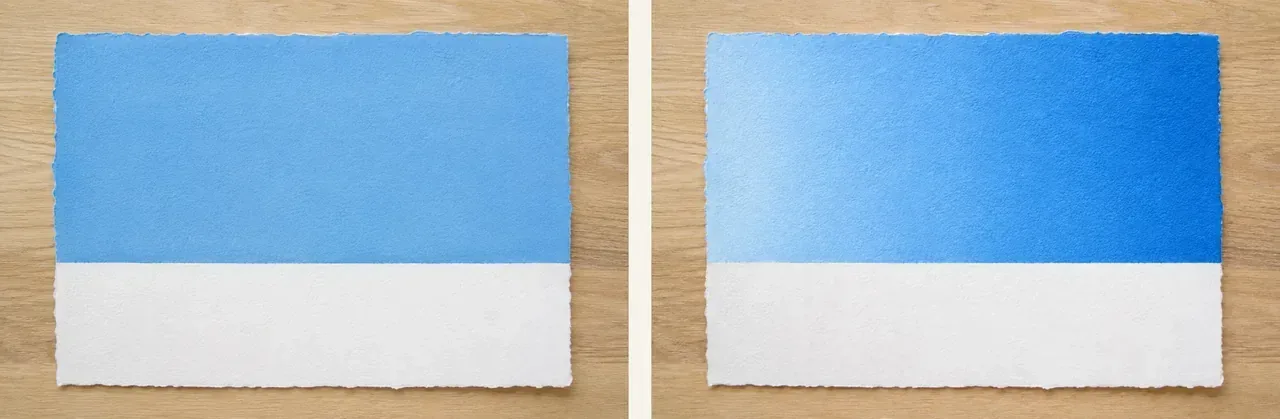
The same color, the same paper, the same brush. What changed is three decisions written down before the sheet was wet.
The digital book "How to Paint a Sky and Water", to read and apply at your own table, with an image in front of you and an offcut of paper beside it.
Keep reading if your sky always ends up the same blue all over, or if your water stands up like a wall:
- Why a large area cannot be fixed while you are laying it: it dries in one piece, and whatever was not decided beforehand cannot be caught up in the same place.
- The three decisions taken before you wet anything, in this order and in no other: the direction, the window, the return.
- What the shine on the paper tells you, and at what second exactly it stops telling you. That length of time is not the same at your table as at the table of the person you are watching.
- Where the cauliflower comes from, that hard edge in the middle of a sky: it is not a fault of color, it is a fault of timing.
- Why light clouds and glints on water do not get laid but gone around, and how their places are decided before the first color.
- What makes a reflection believable: water gives back less light, less sharpness and less detail, and copying it exactly is what stands it up like a wall.
Dear reader,
You have a box, some paper, and an image of a seashore or a lake that you have liked for a long time. You do not dare. Or you did dare, and the sheet is in a drawer.
You know how it goes. The sky starts well, then you have to hurry, then you have to hurry more, then you come back on a place that dried without warning and a hard patch appears in the middle. As for the water, it looks like a piece of blue wall standing up under the sky. And you put the box away telling yourself this is not for you.
From: Élise Marchand, for The Paint Method
Place: a kitchen table, somewhere in France
It is not an object, it is an area, and that changes everything
What changed everything for me was not a better brush. It was understanding what a sky and a stretch of water have that is particular: they have no edge to follow.
An apple tells you where to stop. A sky does not. It covers half the sheet, it has no inner limit at all, and it dries in one piece, from its thinnest side toward its heaviest, without asking your opinion. Everything you want to put into it has to go in while it is still open. After that, whatever you lay leaves an edge.
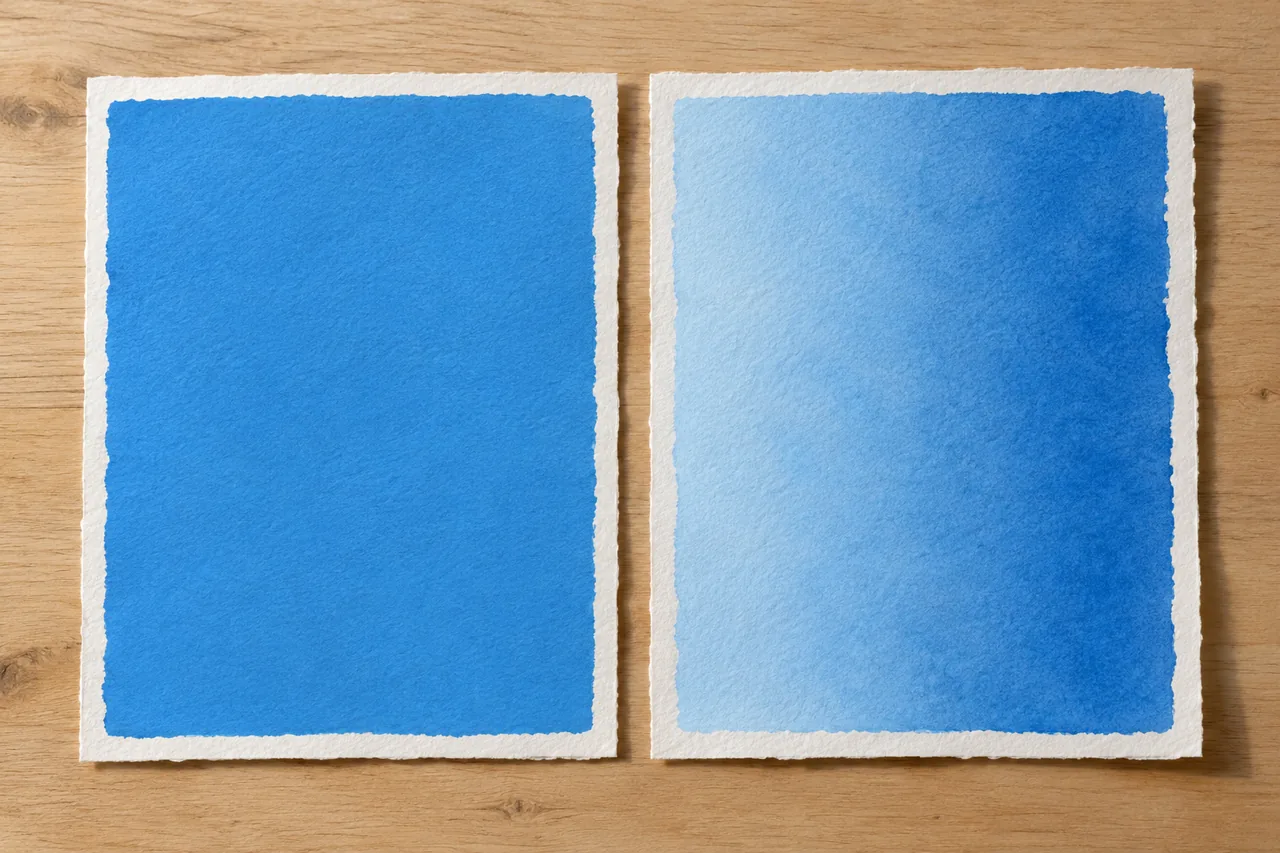
That is where the rule holding the whole book comes from: you decide before you wet, and you decide three things. The direction is the side the light comes from, so the side on which the area is lightest. The window is the length of time during which that area will still take being touched without keeping a mark. The return is what the water gives back of whatever stands above it: less light, less sharpness, and upside down.
You can take the first one tonight, without painting: take an image of a sky that is yours, and draw in the margin, in light pencil, an arrow starting from the lightest side. That costs nothing. But one decision out of three does not make an area that holds: you need all three, and you need to take them in order.
The three decisions, in this order and in no other
The direction. A sky that is the same from one end to the other does not say where the light comes from, and the eye sees that from three feet away. You choose a light side, you write it down, and your hand runs that way. The sky and the water take their light from the same place, but water does not give it back the same way, and its light side is not always on the same side.
The window. The water sitting on the sheet gives light back as long as it is still on top: that is the shine. While it is there, anything that has to blend can still go in. When it goes, the paper turns matte, and whatever you lay after that stops exactly where the brush stops. That length of time gets measured once, on an offcut, and the number you get is yours: it depends on your paper and on your room.
The return. Water does not copy what it reflects. It gives back less light, less sharpness and less detail, it gives it back upside down, and the reflection starts at the foot of the shape rather than at the bottom of the sheet. That is the decision that lays the water down instead of standing it up.
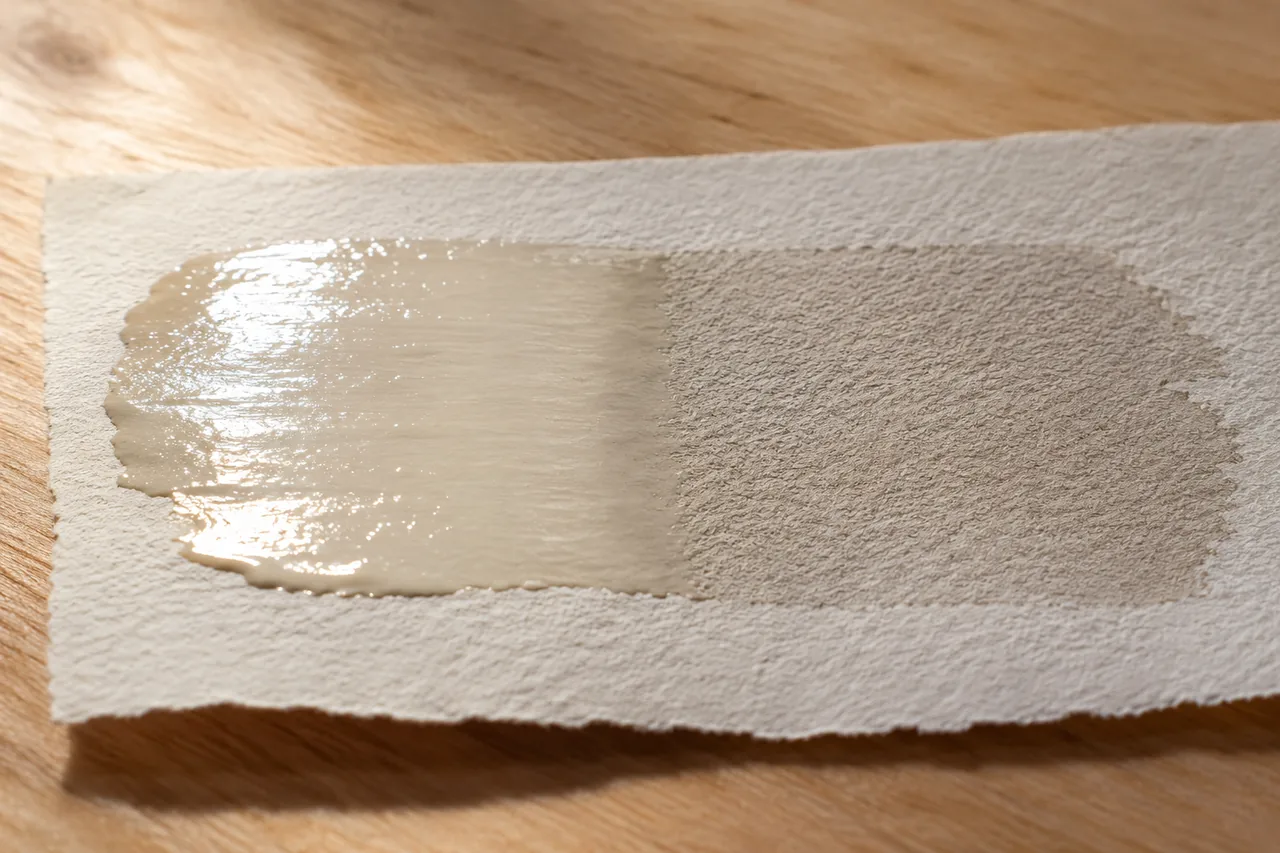
The order counts. The direction first, because it commands the side your hand runs from. The window next, because it says what goes in and when. The return last, because it gets laid inside the window of the water, and written after that it always arrives too late.
At this point, you have two options
The second option asks for one read and one offcut of paper. The first costs sheets you no longer dare take out of the drawer, and an image you still have not painted.
Imagine
- Imagine starting a sky already knowing which side its light will be on, because the arrow is drawn in the margin and the side is named beside it.
- Imagine looking at your sheet in raking light and knowing, without touching it, whether it will still take something or whether it is finished for that area.
- Imagine light clouds that are paper never touched, gone around because their places were marked before the first color.
- Imagine water that lies down: its waterline straight, its reflection blurrier than what it reflects, and three flat strokes laid once it is dry.
- Imagine taking your seashore image out again on a Sunday afternoon, and painting it, instead of looking at it once more.
What you will be able to do when you close it
- Point out, on a sheet you painted yourself, the pieces that are large areas, and say which of the two you laid first.
- Draw the direction arrow in the margin of an image you already have, name the light side in writing, and say what you saw it by, including on an overcast sky with no sun showing.
- Lay a band on an offcut, count until the shine goes, and write that number down: it is your own window, on your own paper.
- Write, before you wet anything, the ordered list of what will go into the area, each line marked "before the matte" or "after the matte".
- Mark and go around gaps: the light clouds and the glints on water, which are paper never touched and never scratched afterwards.
- Make a cauliflower on purpose on an offcut, then recognize one on a dry sheet by pointing at it.
- Draw a straight waterline, checked by comparing its two ends against the edge of the sheet, and start a reflection at the foot of the shape it reflects.
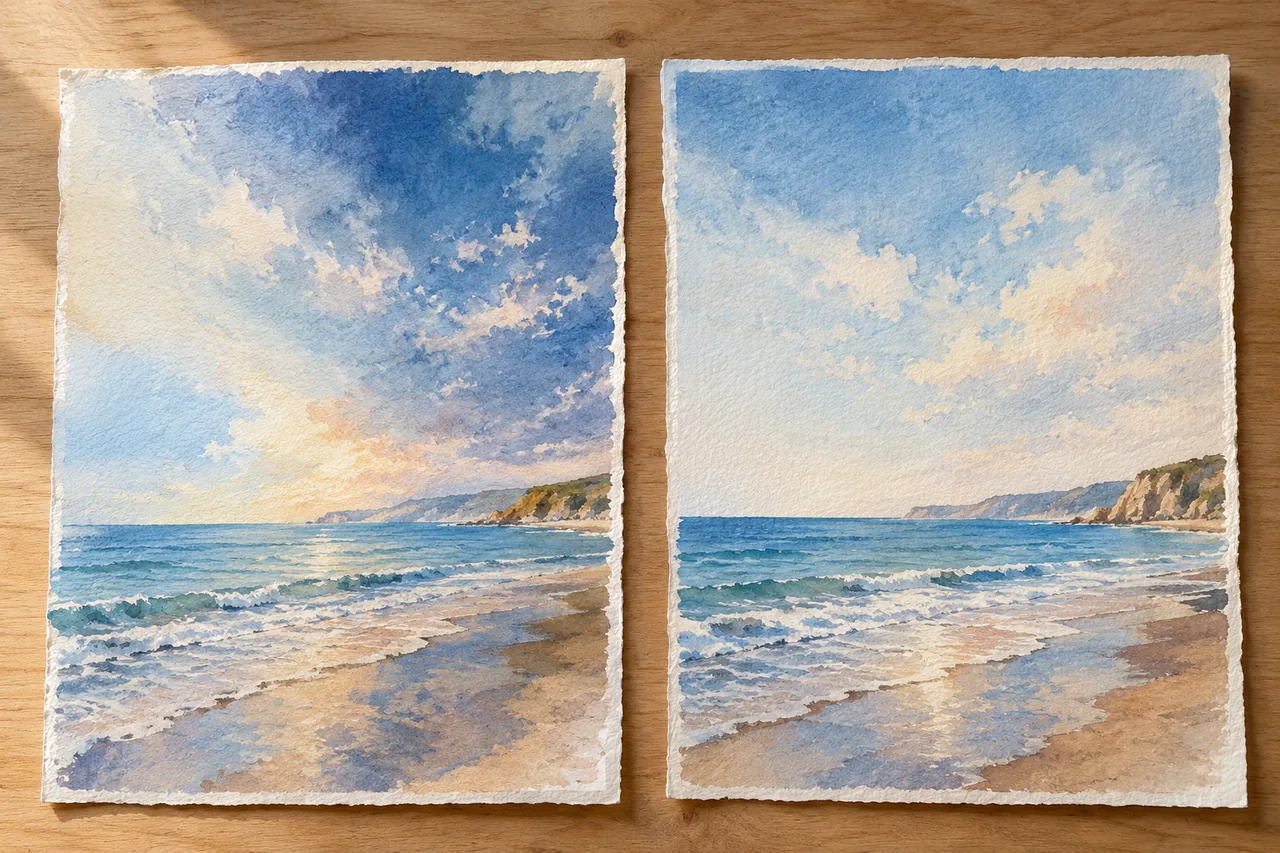
- Carry three full run-throughs, from the filled-in card through to the dry sheet: a sky on its own, calm water under an overcast sky, and a seashore late in the day.
What you need to have, and what you must not buy
You need nothing more than what you already own. That is a rule I set myself while writing this book. The most common advice, when a sky goes wrong, is to buy more expensive paper or a wider brush. It is the advice that costs the most and settles the least.
The materials list asks you to buy nothing, and it was written after the thirty-seven lessons rather than before: your painting sheets exactly as they are; your offcuts, the strips you trim off and the sheets that went wrong; your colors and your brushes exactly as they are; an ordinary graphite pencil and something to rub out with; a cloth to squeeze the brush out on; something to count time with, a watch, a phone or your own voice; an ordinary lamp or a window, to look at the sheet from the side; an image of a sky and an image of water that are yours; and the five forms, printed or copied out by hand.
The grain counts a great deal here, and that is exactly why you buy nothing: a drop of water set flat on two of your sheets answers on its own. The one that keeps the drop on the surface longest is the one that will hold a large area, and the other goes to one side. You settle between what you have, you replace nothing.
That is all. No paper to buy, no brush to buy, no color to buy, and no application to install.
Which paint it is written for, who it is for, and what this book is not
The book is written for watercolor, and the three decisions hold in the same way for gouache and for thinned acrylic: nothing they decide depends on what is in the pan. Two things change with those two, and the book flags them where it matters: the window is shorter, and the light gets laid back over the top, so it does not have to be saved in advance. It is not written for oil, where the window it talks about does not exist.
This is for you if you are starting out or coming back after years, and if you have wet a sheet at least once. You have already watched a sky turn as it dried, or water stand up like a wall, without knowing at what moment it was decided. You want to understand what is happening, not copy a model step by step.
This is not for you if you are after a finished painting to reproduce: this book stops at two areas that hold, and two areas do not make a painting. Nor if you have been painting for fifteen years and already know where your window ends.
What this book is not. It is not a course on value, the word for how dark or light a color is whatever its hue: this book measures no gap between your darkest and your lightest, and the book of the collection that does is Why Your Painting Looks Flat. It is not a course on arranging a picture: it arrives once your image is chosen, it does not choose it and it does not crop it, and that is the subject of Painting from Your Own Photo. It builds no color, which is the subject of How to Make Brown (and All Your Beiges) with Two Colors, and it never works back from a color that went wrong to its cause, which is the subject of Why Your Colors Turn Gray. Each of those jobs is named in the book, and sent to the book of the collection that covers it.
The questions you are asking yourself
"My paper is not the same as yours." That is exactly why nothing in this book rests on the name of a paper. You set a drop on the sheets you have, you note which one keeps it on the surface longest, and you measure your window on that one. The number you get holds at your table only, and it holds as long as nothing changes.
"I always put too much water in." That is the sentence I hear most, and it gets settled by timing, not by quantity. The same load of the brush laid while the area still shines blends on its own; laid two minutes later, it pushes the pigment away and leaves a hard edge. This book has you make that edge on purpose, once, so that you never again mistake it for a problem of color.
"My sky always ends up darker than I wanted." On an offcut you will see the gap between the color wet and the same color dry, and you will see it on your own paper. Watercolor dries lighter than it is laid. That is an observation, not a theory.
"I do not have the time." The three decisions get written on one card, and the card gets filled in without wetting the sheet. You can fill it in on the train, in front of an image you already have.
"I am afraid of spoiling a good sheet." You will not touch it. Everything that gets tried gets tried on an offcut of the same paper, and that is exactly what offcuts are for.
"I am just not gifted." Nobody is born knowing that an area stops taking the brush at the precise moment it stops shining. It is not talent, it is information, and nobody gave it to you.
"And if I need help?" You write to contact@thepaintmethod.com. A real address, on this page, before you buy.
I am pleased to introduce my digital book:
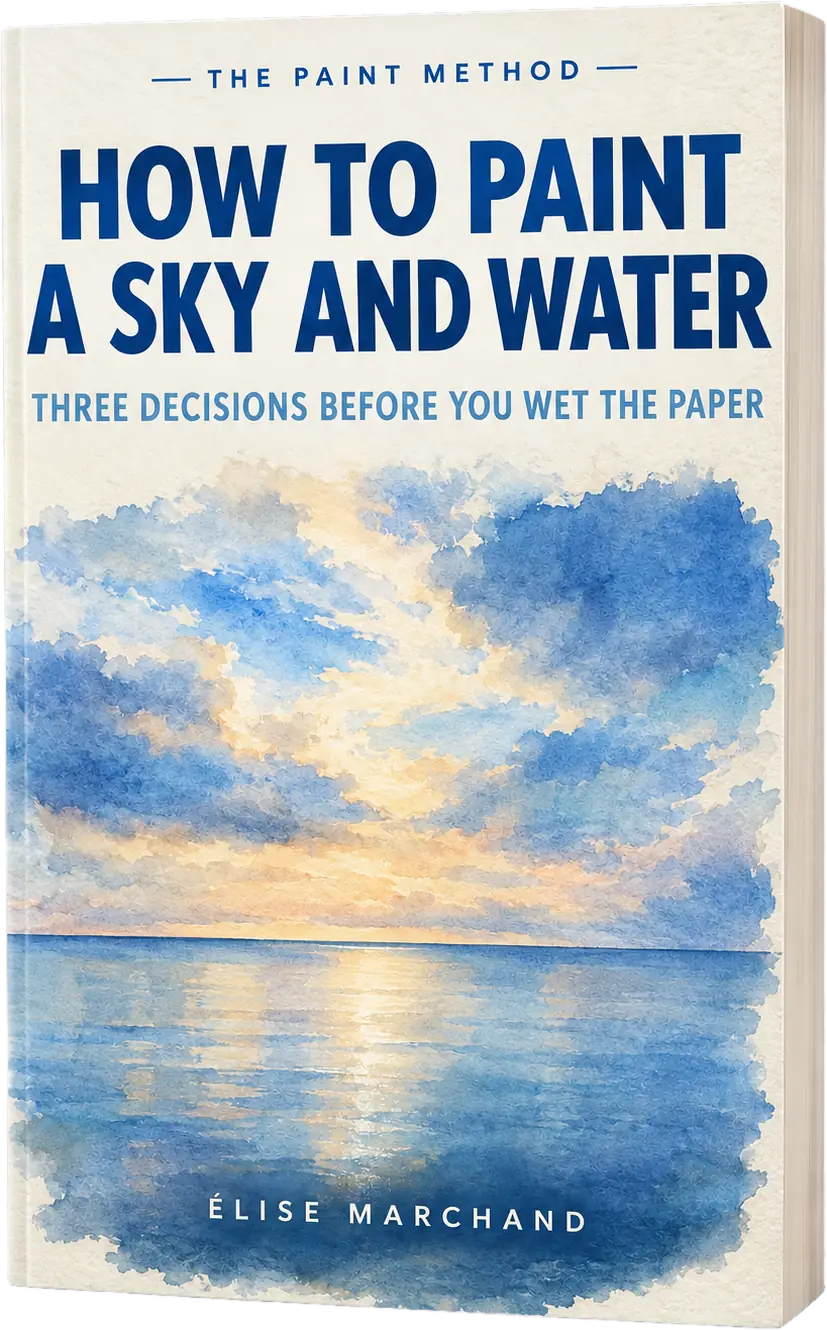
"How to Paint a Sky and Water"
A digital book in PDF, to read on your phone beside the sheet, on your computer, or printed if you prefer paper.
It is built around a constraint I set myself: every mechanism is shown on a dry sheet. You have to be able to compare what is in front of you with what is on the page, and recognize your own case without having to describe it in words you do not have. There are sixty-four of them, in color.
Every lesson ends with a line that begins "By the end of this lesson, you can", and names something you do, not something you understand. That is what can be checked.
It is written in plain language, with no expert vocabulary. You need nothing but your box, an image of your own and an offcut of paper.
What is inside, part by part
Three lessons. What a large area has that an object does not, and why it cannot be fixed while you are laying it. The three decisions are given in the very first pages, on one simple sky, through to the filled-in card, without wetting the sheet.
Six lessons. The wallpaper sky and what it is missing. Finding the light side on an image you already have, and on an overcast sky where no sun shows. The hand that runs with the direction. The direction of the water, which depends on the sky's without being the same. And the drop of water that settles between your papers.
Six lessons. The shine and what it tells you. How long YOUR window lasts, measured at your table on your paper. The cauliflower, and where it comes from. The ordered list of what goes in, before or after the matte. The gaps. And what to do once the window has closed. This is where what is called elsewhere a wash, a broad and very diluted layer laid in one go, gets its plain name. What is called elsewhere a glaze, transparent layers laid one over another, is not what happens here: a large area is one single layer that has to cover the sheet from one end to the other.
Five lessons. What water gives back, and what it does not. What reflects and what does not. The waterline, the only truly horizontal line on the sheet. Where a reflection starts, and why it widens as it comes toward you.
Six lessons. The sky laid in one piece. Clouds made of gaps, and clouds made of an edge laid inside the shine. The sky that goes from warm to cool, where two colors meet on their own. The storm sky and the grain coming up. And the way the bottom of the sky stops.
Six lessons. Calm water laid like a sky. The reflection taken inside the window, which is what gives it its blur. The horizontal strokes that make water, laid after the matte. The white glints, which are gaps. Water that moves and the broken reflection. And the edge of the water, where it meets a bank.
Five lessons. The six-point check, run before you wet anything, which stops at the first line that does not hold. Then three step-by-step run-throughs, from the filled-in card through to the dry sheet: a sky on its own, calm water under an overcast sky, a seashore late in the day. It ends by painting again a sheet you spoiled before, and laying the two side by side.
The large-area card, the direction card, the window strip with its counting scale, the ordered list with its two columns before and after the matte, and the entry and check card with its six points.
You don't need better paper to check.
An offcut of your usual paper is enough, and the test takes ten minutes.
Tonight you will know which three decisions are made BEFORE the sheet is wetted, and why a failed sky had already failed before the first stroke.
Skies and water are not rescued along the way. They are decided beforehand.
And you?
Which sky will you decide on first?
Your digital book, today
- The complete book in PDF: 37 lessons, 7 parts, 64 color plates (value: $47)
- The five printable forms, including the large-area card, to fill in once for every sheet you paint
- The six-point check, to run before you wet anything, which stops at the first line that does not hold
- The three full run-throughs, carried from the filled-in card through to the dry sheet
Value: $47 → today:
The usual price of this book is $47. Today, it is $17.
Lifetime access, to read and reread at your own pace, on whatever you like.
100% digital access, immediate. Nothing is shipped.
You get your access by email, within a minute of your order.
30-day guarantee, no conditions
Read the book. Measure your window on an offcut. Carry the first run-through, a sky on its own, from the filled-in card through to the dry sheet. If within 30 days you feel it brings you nothing, write to contact@thepaintmethod.com and you are refunded in full.
No form, no justification, no questions. And you keep the book: I would not know how to take it back anyway.
In other words: either you can finally hold a large area, or this book costs you nothing. The only risk left is closing this page and starting one more sky without knowing at what moment it got away from you.
P.S. If you remember one thing from this page, remember this: a sky and water cannot be fixed while you are laying them. They are large areas, they dry in one piece, and whatever was not decided beforehand cannot be caught up in the same place. The direction, the window, the return: three lines written before you wet anything.
P.P.S. The book is $17 today instead of $47, and it is covered by the 30-day guarantee. You can read it tonight, draw your first arrow on an image you already have, and decide afterwards.